Exciting Games for First Graders That Spark Growth 2026
If your first grader is bored with worksheets or anxious about math, you’re not alone. Many six- and seven-year-olds need movement, color, and quick wins to stay interested.
The good news is that the right games can make math practice something they actually look forward to.
In this guide, you will find the best interactive and free math games for first graders, plus simple tips to use them at home or in the classroom. These ideas focus on real learning, not just screen time.
At this age, children learn best by doing. They like to tap, drag, build, count, and compete in friendly ways.
Good learning games for first graders work because they:
- Break big skills into small steps
- Give instant feedback
- Repeat key ideas without feeling repetitive
- Build confidence through small successes
When a child solves a problem and sees stars, coins, or happy characters, their brain connects math with positive feelings. That makes them more willing to try again.
Before choosing Games for First Graders, it helps to know what skills matter most in Grade 1.
Focus on:
- Counting to 100
- Addition and subtraction within 20
- Comparing numbers
- Place value basics
- Simple word problems
- Shapes and patterns
The best free 1st-grade math game options support these exact skills in fun and simple ways.
Here are trusted platforms that offer strong learning value. These are great games for first graders online that balance fun and real practice.
1. SplashLearn
SplashLearn offers interactive math activities designed around school standards. The games adjust to your child’s level, so they are not too easy or too hard.
Why it works:
- Clear progress tracking
- Visual models for addition and subtraction
- Step-by-step skill building
It is especially helpful for parents who want structured practice.
2. Khan Academy Kids
Khan Academy Kids is completely free and includes math, reading, and more. The math section uses stories and characters to guide children.
Why parents like it:
- No ads
- Strong educational design
- Works well for independent practice
It also includes some reading games for 1st graders for free, which is helpful if you want both math and literacy in one app.
3. Prodigy Math
Prodigy Math turns math into an adventure game. Kids solve math problems to battle and explore.
Best for:
- Kids who love video games
- Practicing math facts
- Building speed and confidence
Some features are paid, but basic math practice is available for free.
4. ABCmouse
ABCmouse includes math games, reading, and science. While it is mostly subscription-based, it sometimes offers free trials.
It is useful for families looking for a full curriculum-style platform with rewards and levels.
5. Coolmath4Kids
Coolmath4Kids focuses on puzzles and logic along with basic math skills.
This is good for:
- Thinking skills
- Problem solving
- Kids who enjoy challenges
It feels more like play than schoolwork.
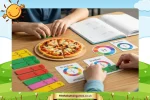
Not every child learns best on a screen. Here are simple indoor games for first graders that build math skills at home or in class.
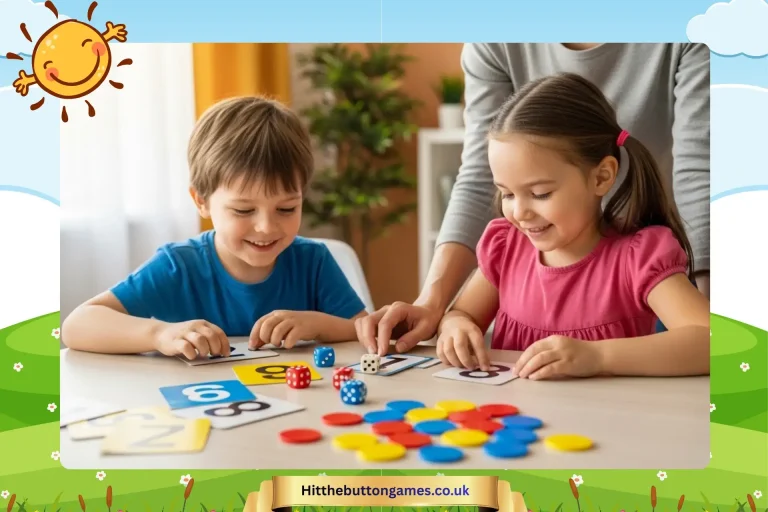
1. Dice Addition
Give your child two dice. They roll and add the numbers together.
To make it more challenging:
- Use three dice
- Set a target number
- Turn it into a race
This is one of the easiest, fun games for first graders that builds mental math fast.
2. Math Bingo
Create bingo cards with numbers. Call out addition problems instead of numbers.

Children solve the problem and mark the correct answer. This works great in games for grade 1 classroom settings.
3. Build the Number
Ask your child to show a number using the following:
- Coins
- Blocks
- Drawings
- Tally marks
This strengthens place value understanding in a hands-on way.
Not all games for first graders are equally helpful. Some look colorful but teach very little.
Look for games that:
- Match your child’s level
- Give clear instructions
- Provide instant feedback
- Focus on one skill at a time
- Avoid too many distractions
If your child feels frustrated, the level may be too hard. If they get bored quickly, it may be too easy.
Teachers can use games for grade 1 classroom time in small groups or centers.
Smart strategies include:
- Rotating math stations
- Pairing stronger and developing learners
- Using short timed challenges
- Tracking weekly progress
Games should support your lesson goal, not replace teaching. Use them to reinforce what students already learned.
Every child learns differently.
For visual learners:
- Use number lines
- Use bright counting blocks
- Choose animated digital games
For active learners:
- Add movement
- Try hopscotch math
- Use floor number mats
For children who struggle:
- Break problems into steps
- Start with smaller numbers
- Celebrate effort, not just correct answers
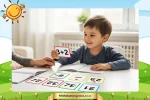
Many platforms also offer educational games for grade 1 for free download, which can help families with limited internet access.
Here are a few things to avoid:
Too much screen time
Even the best free educational games for 1st graders should be limited. Aim for 15 to 30 minutes at a time.
Choosing games that are too advanced
Harder does not mean better. Confidence matters more than speed.
Using games as babysitting tools
Stay involved. Ask your child what they learned. Let them explain their thinking.
No. Games are powerful tools, but children still need the following:
- Direct teaching
- Practice with paper and pencil
- Real-world math experiences
The best approach combines structured lessons with free math games for first graders that make practice enjoyable.
First grade is the perfect time to build a strong math foundation. When children see math as fun instead of scary, they develop skills that last for years.
The right mix of games for first graders online, hands-on activities, and supportive teaching can make a huge difference. Keep it simple, stay involved, and focus on steady progress.
Math does not have to feel like pressure. With the right hit-the-button games, it can feel like play.