Power Up Your Addition and Subtraction Skills 2026
Have you ever seen a kid doing exercises on his fingers with simple problems like 8 + 7 or 15 − 9? That little delay can make big math problems feel stressful. The good news is that speed when adding and subtracting numbers is something you can develop with the right amount of practice.
You will learn how to do addition and subtraction faster by playing simple games, doing smart drills, and taking practical speed tests in this guide. All are written in clear simple English and are suitable for use at home or in the classroom.
When children know their basic facts quickly, their brains have more space for harder math. They can focus on understanding the problem instead of struggling with simple sums.
Strong speed also builds confidence. A child who can answer quickly feels capable, which reduces math anxiety and improves overall performance.
Speed does not mean rushing. It means knowing the facts so well that answers come naturally.
An addition and subtraction speed test checks how many problems a student can solve correctly in a set time. Most tests last one to five minutes.
You can find:
- An addition and subtraction speed test free on many education websites
- An addition and subtraction speed test online with automatic scoring
- An addition and subtraction speed test PDF for printing
- An addition and subtraction speed test worksheet for classroom use
These tests are often called a math speed test or a mental math speed test. They are simple but powerful. They show accuracy, speed, and progress over time.
Before moving to larger numbers, students must master addition and subtraction facts to 20 with speed test practice.
This includes sums like the following:
- 9 + 6
- 14 − 8
- 7 + 8
- 18 − 9
A basic facts addition and subtraction speed test helps students answer these without counting on their fingers. When facts to 20 are automatic, everything else becomes easier.
Speed comes from strategy, not guessing. Teach these simple techniques.
1. Make Ten Strategy
When adding numbers like 8 + 6, turn it into 10 + 4.
Break 6 into 2 and 4.
8 + 2 = 10, then 10 + 4 = 14.
This works because our brains handle tens more easily.
2. Use Doubles and Near Doubles
If a child knows 7 + 7 = 14, then 7 + 8 is just one more.
That makes it 15.

This reduces thinking time.
3. Count Back for Subtraction
For small numbers, counting back works well.
For example, 15 − 3 means count back three steps from 15.
For bigger numbers, use place value instead of counting one by one.
4. Break Apart Numbers
For 34 − 12:
34 − 10 = 24
24 − 2 = 22
Breaking numbers makes subtracting numbers easier and faster.
Speed improves faster when practice feels like play.
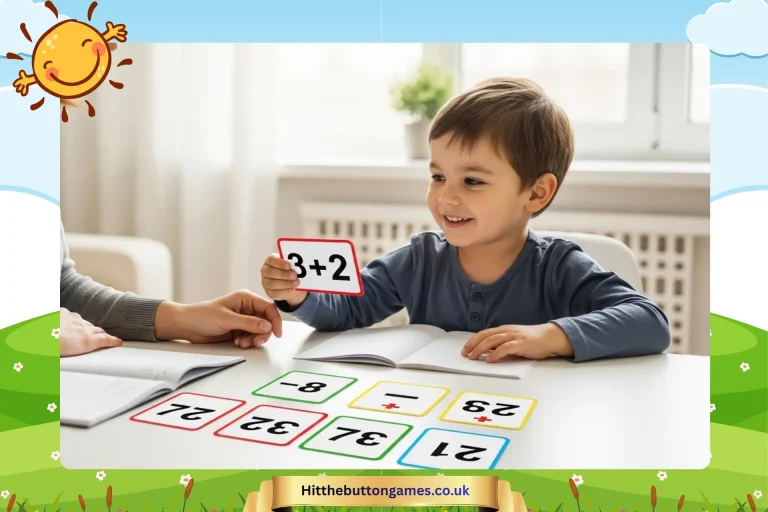
1. Flashcard Race
Set a one-minute timer.
Show as many cards as possible.
This works well as a math addition and subtraction speed test at home.
2. Dice Challenge
Roll two dice and add them quickly.
Roll three dice for more challenge.
For subtraction, subtract the smaller number from the larger one.
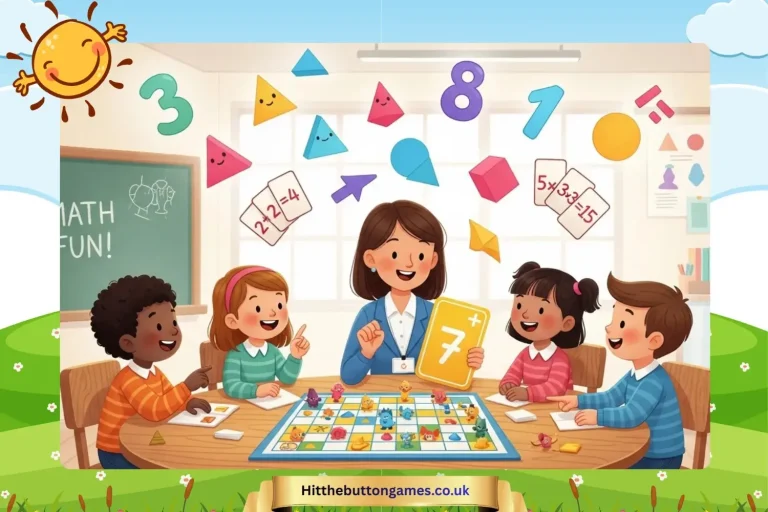
3. Math Speed Relay
Divide students into teams.
Each student solves one problem before passing to the next.
This turns practice into a math speed test game with teamwork and energy.
4. Online Speed Games
An addition and subtraction speed test online gives instant feedback.
Many platforms also track improvement over time.
If you teach in the UK, explore TES resources for addition and subtraction materials that match the national curriculum. You can also include division math games to give students well-rounded practice with all four operations.

A printable addition and subtraction speed test PDF is useful for weekly tracking.
Here is how to use it well:
- Set a fixed time, such as two minutes
- Focus on accuracy first
- Repeat the same level for one week
- Compare scores at the end of the week
An addition and subtraction speed test worksheet should match the child’s level. Too hard causes frustration. Too easy slows growth.
For UK learners, an addition and subtraction speed test KS2 often includes the following:
- Two-digit and three-digit numbers
- Word problems
- Adding and subtracting time
- Larger mental calculations
An addition and subtraction test for Year 5 may also include adding and subtracting numbers with regrouping.
At this stage, students should move beyond facts to 20 and practice mental strategies with bigger numbers.
Adding and subtracting time is a real-life skill.
Example:
If a movie starts at 3:45 and lasts 1 hour 30 minutes, what time does it end?
Teach students to:
- Add hours first
- Add minutes
- Adjust if minutes go over 60
This builds strong number sense and prepares students for real situations.
A good math speed drill app can provide the following:
- Timed quizzes
- Instant scoring
- Level adjustment
- Progress reports
Apps are helpful for daily five-minute practice. They should support mental thinking, not just tapping random answers.
Relying Only on Fingers
Finger counting works at first, but it slows progress. Encourage mental strategies instead.
Ignoring Accuracy
Speed without accuracy builds bad habits. Always check correct answers first.

Practicing Too Many Skills at Once
Focus on one goal at a time. For example, practice addition facts to 20 before mixing everything together.
Short daily practice works best.
Try this plan:
- Five to ten minutes of practice
- One formal mental math speed test per week
- Monthly review using the same format
Improvement shows when practice is regular and focused.
Benefits
- Builds confidence
- Strengthens memory
- Prepares students for exams
- Makes mental math automatic
Limits
- Can cause stress if overused
- Should not replace deep understanding
- Not every learner improves at the same pace
Balance speed with explanation and problem-solving.
Some children learn best visually. Use number lines and color-coded charts. Some prefer movement. Use relay games and board races.
Some need quiet repetition. Worksheets and PDFs may suit them better. Adjust methods based on the learner, not just the curriculum.
Getting faster at adding and subtracting numbers is not about pressure. It is about practice, smart strategies, and small daily wins.
Use games, worksheets, apps, and weekly speed tests in a balanced way. Start with basic facts, build strong mental methods, and increase difficulty step by step.
With steady practice, addition and subtraction will feel easy and natural. That confidence will carry into every other area of math.