Math Fractions Made Easy with Games and Examples 2026
Many kids get confused by fractions. Some days they get whole numbers, and some days they are asked to work with parts of something. That change is frustrating.
This is the good news. Fractions don’t have to feel hard and boring. With the right approach, especially through math fractions games, kids can understand them faster and with more confidence.
This guide explains fractions in a simple way, illustrates how games can assist and offers practical ideas that you can apply at home or in the classroom.
Let’s start simple. What is a fraction in math? A fraction shows a part of a whole. It has two numbers:
- Top number called numerator
- Bottom number called denominator
For example, 1/2 means one part out of two equal parts. Think of a pizza. If you cut it into 4 slices and eat 1 slice, you ate 1/4.
Many students get stuck here. What is an improper fraction in math? It is a fraction where the top number is bigger than the bottom number.
Example: 5/3 This means more than one whole. It can also be written as a mixed number like 1 2/3. Understanding this helps later when learning dividing fractions and multiplying fractions.
Fractions are not just numbers. They are relationships.
Common problems include:
- Trouble visualizing parts of a whole
- Confusion between numerator and denominator
- Difficulty comparing fractions
- Fear of making mistakes
This is where games and hands on learning help a lot.
Games remove pressure. Kids focus on playing, not just getting answers right.
Here is why they work:
1. They Make Abstract Ideas Visual
Games often use objects like slices, cards, or shapes. This helps kids see fractions.
2. They Build Confidence
Kids can try again without fear. Mistakes feel like part of the game.
3. They Improve Thinking Skills
Games train problem solving, especially when working with adding fractions or comparing values.
You do not need fancy tools. Many effective games are simple.
Pizza Fraction Game
Draw a pizza and divide it into slices.
Ask questions like:

- Show 1/2
- Show 3/4
This builds strong basics.
Fraction War Card Game
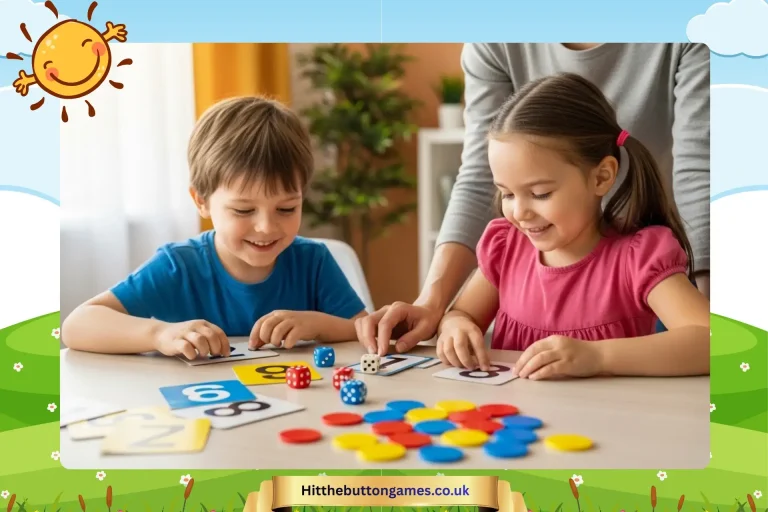
Each player draws two cards to form a fraction.
Example:
3 and 5 becomes 3/5
Compare fractions. The larger one wins.
This helps with quick thinking and comparison.
Fraction Dice Game
Use dice to create fractions.
Roll twice:
- First roll is numerator
- Second roll is denominator
Then practice:
- Adding fractions
- Multiplying fractions
Many people rely only on math fractions worksheets. That can become boring fast.
Instead:
- Mix worksheets with games
- Use them for short practice sessions
- Focus on understanding, not speed
Worksheets are useful, but they work best after hands on learning.
Adding Fractions
Start with same denominators.
Example:
1/4 + 2/4 = 3/4
Then move to different denominators.
Multiplying Fractions
This is easier than most students expect.
Multiply top numbers and bottom numbers.
Example:
2/3 × 3/4 = 6/12 = 1/2
Games help reduce fear here.
Dividing Fractions
This is where many students struggle.
Rule:
Flip the second fraction and multiply.
Example:
1/2 ÷ 3/4 = 1/2 × 4/3 = 4/6 = 2/3
Practice this using cards or dice games.
Equivalent fractions math means different fractions that show the same value.
Example:
1/2 = 2/4 = 4/8
Use visual tools like fraction bars or drawings to make this clear.
Fractions can also be written as decimals.
Example:
1/2 = 0.5
1/4 = 0.25
This is called decimal fraction math.
Linking fractions to decimals helps in real life situations like money.
Tools like a fraction math calculator or fractional math calculator can help.
They are useful for:
- Checking answers
- Understanding steps
- Learning faster
But do not rely on them too early. First build basic skills.
Fractions are everywhere.
Cooking
Recipes use halves and quarters. Kids learn naturally.
Shopping
Discounts and portions involve fractions.
Sports
Scores and time can be broken into parts.
These real examples make learning stick. Meanwhile, hit the button math games provides additional games that help a child learn smartly.
Mistake 1: Adding Top and Bottom
Wrong:
1/2 + 1/2 = 2/4
Correct:
1/2 + 1/2 = 1
Mistake 2: Ignoring Denominators
Always check if denominators match before adding.
Mistake 3: Fear of Improper Fractions
Teach kids that improper fractions are normal and useful.
Because of these mistakes, a child may feel math anxiety, which is bad for his career. So don’t make these kinds of mistakes.
- Keep lessons short and active
- Use real objects whenever possible
- Let kids explain their thinking
- Mix games, worksheets, and real life practice
Consistency matters more than long study time.
Pros
- Fun and engaging
- Builds confidence
- Improves understanding
Limits
- May not cover all exam formats
- Needs guidance to stay focused
Balance games with structured practice.
Fractions become easier when kids can see, touch, and play with them. Dry practice alone often leads to confusion, but combining games, real examples, and short practice sessions builds real understanding.
Start simple. Stay consistent. Use tools like games, worksheets, and even a fraction math calculator when needed. Over time, fractions stop being scary and start making sense.