How to Improve Counting Skills in Early Learners 2026
Anyone who has ever tried to teach a child to count knows that it is not simply a matter of reciting numbers. Some children can recite numbers perfectly but get stuck when asked to count real objects. Others quickly lose interest.
All math learning is built on strong counting skills. When children grasp what numbers truly represent, they become more self-assured when it comes to addition, subtraction and later on, even money.
Let’s break down how to improve your skills in ways that actually work at home and in the classroom.
Before teaching, it helps to understand the counting skills’ meaning. These skills are the ability to
- Say numbers in order
- Match one number to one object
- Understand that the last number counted shows how many items there are
- Recognize written numbers
A common counting skills synonym is “number sense.” It simply means understanding how numbers work in real life.
In early childhood, counting and cardinality skills are the foundation of math. Cardinality means knowing that the final number said represents the total amount.
The development of these skills shapes how children see math. If they only memorize numbers, they struggle later. If they understand numbers, they build confidence.
Counting skills in early childhood help children
- Solve simple problems
- Understand patterns
- Learn addition more easily
- Develop logical thinking
Early counting skills also support focus and memory.
Children grow at different speeds, but here is a simple guide.
Counting Skills for Toddlers (Ages 2 to 3)
Counting skills for toddlers begin with listening and copying.
Typical 3-year-old counting skills include the following:
- Saying numbers from 1 to 5
- Counting a few objects with help
- Understanding simple words like “more” and “less”
Counting skills for 3-year-olds should focus on play, not worksheets.
Counting Skills for Preschoolers (Ages 4 to 5)
Counting skills for preschoolers grow quickly. 4-year-old counting skills often include
- Counting up to 10 or higher
- Matching numbers to objects
- Recognizing some written numbers
5-year-old counting skills usually include the following:
- Counting to 20 or more
- Understanding simple addition
- Beginning skip counting
The key is hands-on practice.
Many games help to develop rote skills for first graders. This means they can say numbers in order but do not fully understand quantity. For example, a child may count to 20 but cannot correctly count 8 blocks in front of them.
To fix this:
- Use real objects
- Slow down counting
- Ask how many after counting
This builds true counting number skills.
Children learn best when they move, touch, and explore.
1. Everyday Counting
Ask your child to:
- Count steps while walking
- Count apples in a bowl
- Count toys during cleanup
Real-life counting builds understanding faster than drills.
2. Counting Games
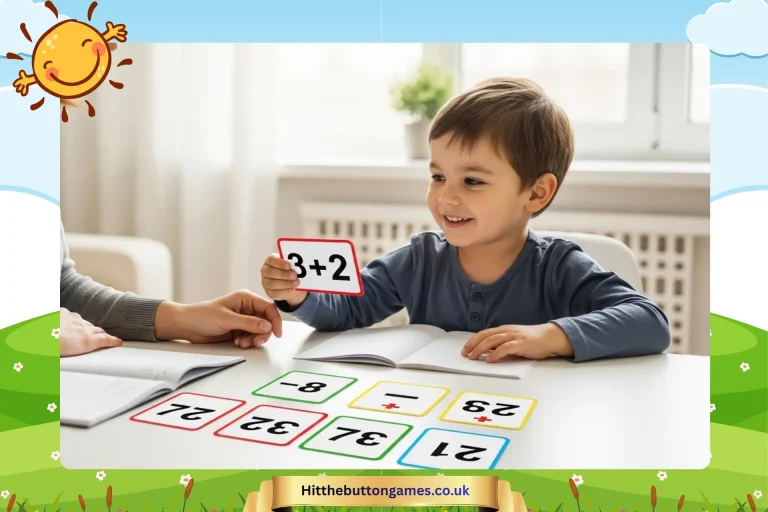
Counting games make practice feel like fun.
Try:
- Board games with dice
- Card games that require scoring
- Hide and seek with counting
Simple online tools like the Hit the Button math game can also support number recall when used in short sessions.
3. Hands-On Objects
Use blocks, buttons, coins, or beads. Move each object while counting. This teaches one-to-one matching.
This method is powerful for counting skills in early childhood because it connects numbers to physical action.
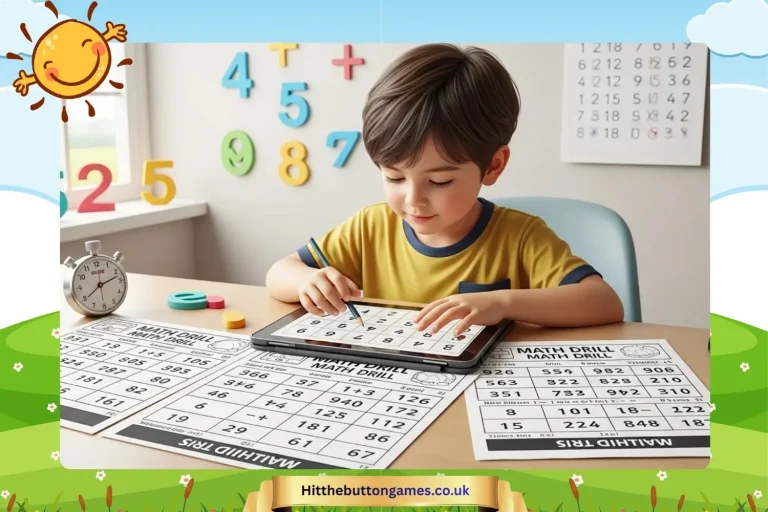
4. Counting Skills Worksheets and PDFs
Counting skills worksheets can help when used correctly.
Use them to:
- Reinforce what children already understand
- Practice number recognition
- Strengthen tracing and writing skills
A counting skills PDF is useful for quick practice at home, but it should not replace hands-on learning.
5. Songs and Rhythm
Music improves memory. Counting songs help children remember sequences and patterns.
Clap while counting. Tap the table. Add movement to keep focus.
If your child struggles, follow this simple process.

- Start with small numbers like 1 to 3
- Use real objects
- Count slowly and clearly
- Ask the child to count again alone
- Celebrate small success
Do not rush into bigger numbers too soon.
Once children are confident up to 10, move forward slowly.
- Practice counting to 20
- Use number charts
- Try skip counting by 2s or 5s
Skip counting helps prepare for multiplication later.
Money counting skills are practical and exciting for kids.
Start simple:
- Count coins by ones
- Group coins by type
- Practice buying pretend items
How to improve money counting skills:
- Use real or play coins
- Role-play store activities
- Count change together
Money counting skills are useful in daily life and even appear on a money counting skills resume for adults in retail jobs.
Counting coping skills is another helpful tool. Some children count slowly to calm down when upset or anxious.
This works because of counting:
- Slows breathing
- Focuses attention
- Reduces stress
It is a simple emotional regulation strategy.
Parents and teachers often make these errors:
Moving too fast
If a child cannot count 5 objects confidently, do not jump to 20.
Overusing worksheets
Practice sheets are helpful but should not be the main method.
Correcting too harshly
Confidence matters. Gentle guidance works better than pressure.
Ignoring hands-on practice
Children must touch and move objects to understand numbers fully.
Some children need more repetition. Others need movement.
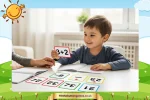
For children who struggle:
- Use larger objects
- Count slowly
- Repeat often
For advanced learners:
- Introduce simple word problems
- Try skip counting
- Practice counting backward
Adapt the method to the child, not the other way around.
At home:
- Count groceries
- Count stairs
- Play quick counting games daily
In the classroom:
- Use group counting circles
- Rotate counting stations
- Display number charts at eye level
Short and regular practice works better than long sessions once a week.
When children build strong early skills, they:
- Feel confident in math class
- Solve problems faster
- Understand patterns easily
- Handle money better later
The development of counting skills supports overall academic success.
Counting may look simple, but it shapes how children understand math for years to come. Focus on real understanding, not just memorizing numbers.
Keep practice playful. Use daily life as your classroom. When children feel relaxed and successful, counting becomes natural instead of stressful. Strong skills today build confident learners tomorrow.