Master Number Recognition | Fun Ways to Boost Skills 2026
If your child can sing a counting song but still has trouble naming a number on a page, you are not alone. Many children can memorize numbers but can’t point out number 7 when asked. That is where the skills of spotting numbers come in.
The first real step to mathematics is strong number recognition. It helps children to learn to associate symbols with meaning, which helps them later in addition, subtraction, place value and problem solving.
When kids truly get numbers, math becomes less scary and more logical. So, let’s look at simple, effective, and fun ways to teach number recognition.
Number recognition means a child can:
- Identify a number when they see it
- Say the correct name of the number
- Match the number to a quantity
For example, when a child sees “5,” they say “five” and understand it represents five objects. That connection is key.
The recognition of numbers 1 to 10 is the starting point. Once children master this range, they can move toward recognition of numbers 1 to 50 and beyond.
There are many number recognition benefits in early learning:
- Builds a strong math foundation
- Improves counting accuracy
- Supports number formation and writing
- Strengthens memory and attention
- Builds confidence in class
Without solid numbers to 10 recognition, children may struggle later with basic math facts. Early practice prevents frustration down the road.
If you are wondering how to teach recognition of numbers clearly, follow this simple process.
1. Start with Small Groups
Introduce numbers slowly. Focus first on numbers 1 to 3. Once those are solid, add 4 and 5.
Too many numbers at once can confuse young learners.
2. Use Objects They Can Touch
Show three blocks and say, “This is three.” Then show the number 3 card. Let them match the card to the blocks.
Children learn faster when they see and touch real items.
3. Repeat in Different Ways
Practice using:
- Number recognition worksheets
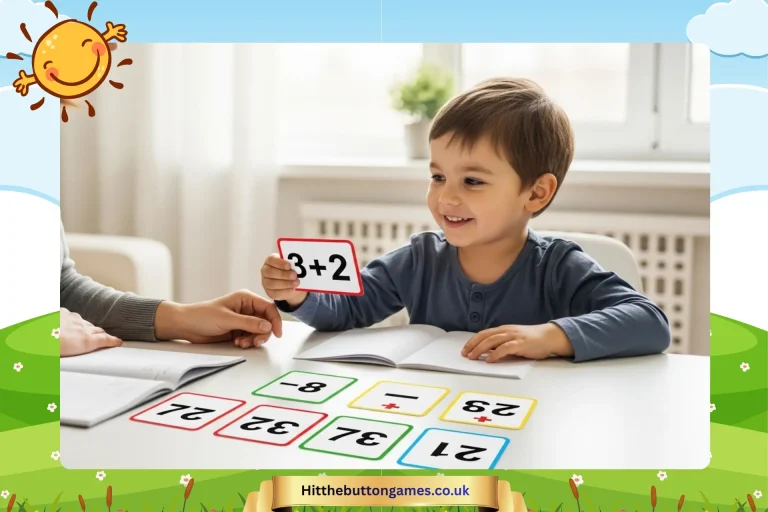
- Flashcards
- Toy sorting
- Drawing numbers
Repetition builds memory, but variety keeps it interesting.

4. Mix Recognition with Formation
Number and formation should be taught together. When children write the number after identifying it, they remember it better.
Use sand trays, finger painting, or tracing sheets to support writing.
Children learn best through play. These recognition activities feel like games, not lessons.
1. Number Hunt
Hide number cards around the room. Ask your child to find number 6 or number 9.
This simple recognition activity builds focus and excitement.
2. Matching Game
Lay out number cards and sets of objects. Children match the number to the correct quantity.
This is one of the most effective number recognition tasks for young learners. Hit the Button games also offers more games that help to master math.
3. Hop to the Number
Place numbers on the floor. Call out a number and have the child jump to it.
Movement improves memory and supports recognition of fine motor skills when combined with picking up or tracing numbers.
4. Bingo
Bingo is one of the best number games for both home and classroom use. It improves listening and quick identification.
For early learners and primary classrooms, structure matters.
In EYFS
Number recognition activities EYFS should focus on play-based learning. Use counting songs, visual cards, and hands-on materials.
Keep sessions short and energetic.
In KS1
Number recognition in KS1 can include the following:

- Recognition of numbers 1 to 50
- Mixed number identification
- Missing number tasks
- Simple number sequencing
At this stage, children should quickly identify numbers without counting from one each time.
Worksheets can help, but only if used correctly.
Good number recognition skills worksheets should
- Be clear and uncluttered
- Focus on one skill at a time
- Include tracing and matching
- Use simple instructions
Avoid giving too many worksheets at once. Practice should feel manageable, not overwhelming.
Problem 1: Child Can Count but Cannot Identify Random Numbers
This means they memorized the sequence but do not understand the symbols.
Solution: Practice showing numbers out of order. Ask, “What number is this?” instead of always counting forward.
Problem 2: Mixing Up Similar Numbers
Children often confuse 6 and 9 or 12 and 21.
Solution: Highlight visual differences. Practice number recognition and formation slowly and clearly.
Problem 3: Forgetting Numbers After Learning Them
This is normal.
Solution: Short daily practice works better than long weekly sessions.
Every child learns differently.
- Visual learners benefit from charts and color-coded number recognition resources.
- Kinesthetic learners need movement and hands-on number recognition tasks.
- Auditory learners respond well to songs and verbal games.
Adjust your approach based on what works best for your child.
You do not need special tools. Count stairs while walking. Point out numbers on doors and clocks. Ask your child to find number 8 on a cereal box.
Daily life offers natural chances to practice. When parents ask how to help with number recognition, the answer is simple. Make numbers part of normal conversation.
Educational apps and digital number recognition games can reinforce learning. Choose tools that:
- Focus on active participation
- Give instant feedback
- Do not overload with distractions
Technology should support learning, not replace real interaction.
Number recognition and fine motor skills go hand in hand.
- Tracing numbers
- Using play dough to shape numbers
- Clipping the correct number of pegs
- Coloring inside number outlines
These activities strengthen hand control while reinforcing visual memory.
Pros
- Builds early math confidence
- Easy to practice daily
- Can be taught through play
- Supports future math success
Limitations
- Requires consistent practice
- Some children need more repetition
- Worksheets alone are not enough
The key is balance. Mix games, worksheets, real-life practice, and writing.
At what age should children learn number recognition?
Most children begin learning recognition of numbers 1 to 10 between ages 3 and 5. Every child develops at their own pace.
How long does it take to master number-to-10 recognition?
With regular short practice, many children feel confident within a few months.
Should I correct mistakes immediately?
Yes, but gently. Guide them to the correct answer rather than simply saying it is wrong.
Is counting the same as number recognition?
No. Counting is saying numbers in order. Number recognition means identifying a number when seen randomly.
Are number recognition worksheets enough on their own?
No. Worksheets should support learning, not replace hands-on activities and games.
Teaching number recognition skills does not need to feel stressful. When children connect numbers to real objects, movement, writing, and play, learning becomes natural.
Start small. Practice daily. Celebrate progress. With the right mix of number recognition resources, games, and real-world practice, children build strong math foundations that last for years.