Make Math Fun for Children with Simple Games. 2026
Math practice doesn’t have to feel like a daily battle. When lessons become repetitive, many kids lose interest and confidence. The right activities can make learning fun, engaging, and something children actually enjoy.
In this guide, you’ll discover simple, effective ways to make math practice exciting at home or in the classroom, with ideas that work for different ages and learning styles.
When children enjoy math, they try harder and give up less easily. Fun activities lower stress and help kids see mistakes as part of learning, not failure.
Enjoyable math practice also improves memory. Children remember concepts better when learning feels playful and active instead of forced.
Many children struggle with math because it feels abstract. Numbers on a page do not always connect to real life.
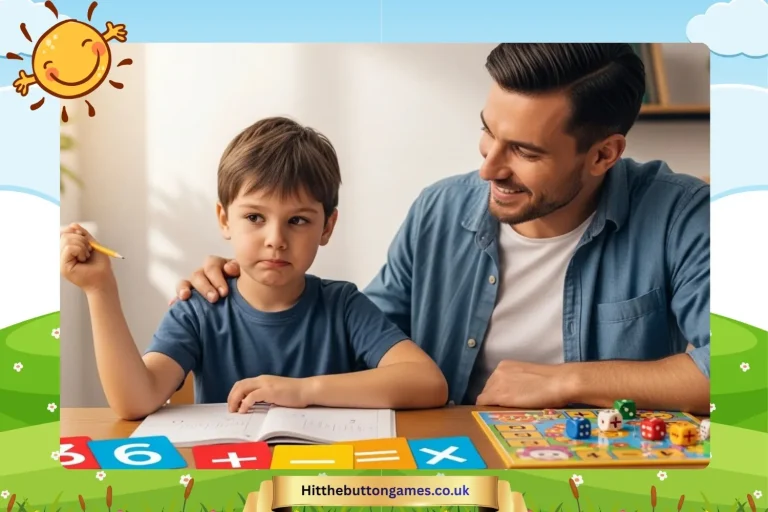
Another issue is pressure. Timed tests and constant correction can make kids anxious. Fun math activities reduce this pressure and build confidence slowly.
A calm and friendly space helps children focus. Math should not always happen at a desk with worksheets.
Choose a quiet corner with good light. Add simple tools like counters, number charts, or whiteboards to make learning feel different from schoolwork.
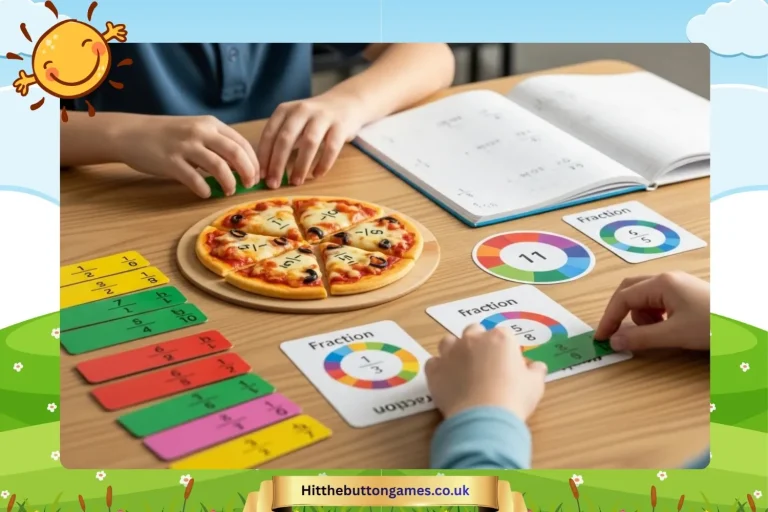
Children understand math faster when they can see or touch it. Visual tools turn abstract ideas into real objects.
Use beads for counting, blocks for place value, and drawings for word problems. These tools are especially helpful for younger learners and visual thinkers.
Games change how children feel about practice. They replace pressure with excitement and curiosity.
Maths Games for Kids at Home and School
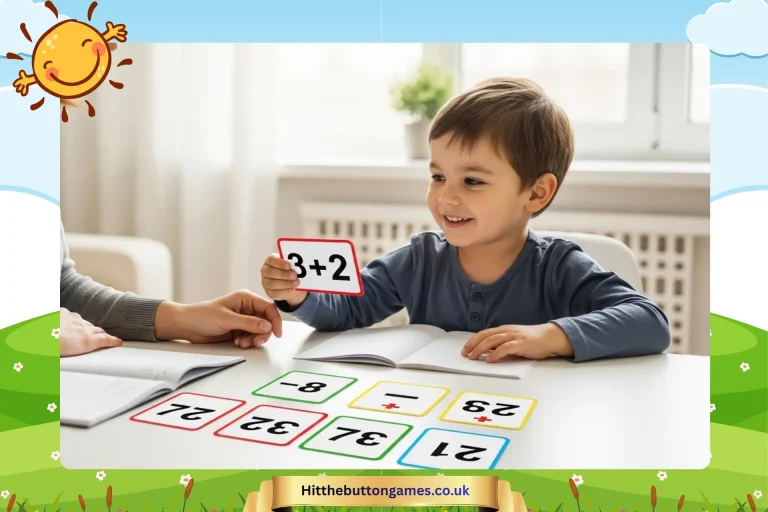
Board games like number bingo and card games with scoring improve basic skills without feeling like work. Dice games are great for addition and subtraction.
Team games also work well. Children learn from each other and feel motivated when playing together. For quick and engaging practice, you can also check Hit the Button games, which help kids build speed and confidence in a fun way.
Digital tools can make math practice fun for children online when used correctly. Many platforms use rewards, levels, and animations to keep kids engaged.
Online games are helpful for quick practice sessions. They work well alongside hands on learning, not as a replacement.
Printable activities are easy to use and flexible. They work without screens and can be reused.
You can find math practice fun for children printable sheets that include puzzles, coloring tasks, and simple challenges. Many parents prefer math practice fun for children free printable resources for daily use.
Creativity helps children see math in new ways. It also supports learners who struggle with traditional methods.
Art Based Math Learning
Ask children to draw shapes, patterns, or number art. This makes geometry and symmetry easier to understand.
Craft projects can include measuring, counting, and sorting. These activities often appear in creative maths activities PDF resources used by teachers.
Math is everywhere. Using real life situations helps children understand why math matters.

Cooking teaches measuring and fractions. Shopping builds budgeting and mental math skills. Even setting the table involves counting and grouping.
Children often learn faster with others. Group activities reduce fear and increase participation.
Simple competitions work well when the focus is on effort, not winning. Team problem solving builds communication and confidence.
Every child learns differently. Some learn by seeing, some by hearing, and others by doing.
Visual learners benefit from charts and diagrams. Auditory learners enjoy math songs and spoken problems. Active learners need movement and hands on tasks.
Mixing activities keeps math practice fun for children KS2 and beyond.
Small rewards can motivate children when used carefully. Stickers, stars, or extra playtime work well.
Praise effort more than correct answers. This teaches children that trying matters more than being perfect.
Fun should support learning, not replace it. Games should still connect to real math skills.
Explain what children are learning during play. Short discussions help them understand the purpose behind the activity.
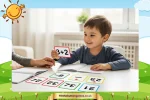
At home, learning can be relaxed and flexible. Short sessions work better than long lessons.
In classrooms, fun maths activities for primary students help manage attention and encourage participation. Group games and rotations work especially well.
Fun math builds confidence, improves focus, and encourages curiosity. Children become more willing to try challenging problems.
However, fun activities still need structure. Without guidance, children may enjoy the activity but miss the learning goal.
Making math practice fun for children is not about tricks or pressure. It is about understanding how kids learn and meeting them where they are.
With games, creativity, and real life connections, math becomes less scary and more meaningful. When children enjoy learning, confidence grows and progress follows naturally.