How to Teach Basic Operations Using Math Games 2026
If your child is a game player, but a math book turns him or her off? You’re not alone. For a lot of children numbers are abstract and boring, and it’s hard to learn basic mathematical operations.
The good news is: When you teach basic operations through games, children learn faster and with less stress. They stop being afraid of making mistakes and start to see math as something they can solve.
This guide shows you exactly how to teach addition, subtraction, multiplication and division in ways that make sense to real kids, at home or in the classroom.
Before jumping into games, let’s make things clear.
The 4 fundamental operations in mathematics are
- Addition
- Subtraction
- Multiplication
- Division
These are also called the four basic operations in math worksheet topics in most schools. Every higher math skill builds on them.
If a child feels confused here, math will only get harder later. That is why strong foundations matter so much.
Worksheets alone often lead to boredom. Kids repeat problems without really thinking about what the numbers mean. Games change that.
When children play, they:
- Focus longer
- Take risks without fear
- Practice skills repeatedly without feeling forced
- Get instant feedback
Repetition is important in learning. Games allow practice again and again without feeling like drilling.
1. Start With Clear Teaching of Basic Operations Examples
Before playing, show simple basic operation examples using real objects.
For example:
- 3 apples plus 2 apples equals 5 apples
- 10 blocks minus 4 blocks equals 6 blocks
When children can see and touch objects, math becomes real. Once they understand objects, move to numbers on paper.
Addition is usually the first step when you teach basic operations to KS2-level students.
Dice Addition Game
Give two dice to a child. They roll both dice and add the numbers together. Write the answer down. Keep score for 10 rounds.
Why it works: Kids love rolling dice. The excitement keeps them engaged while practicing quick mental addition.
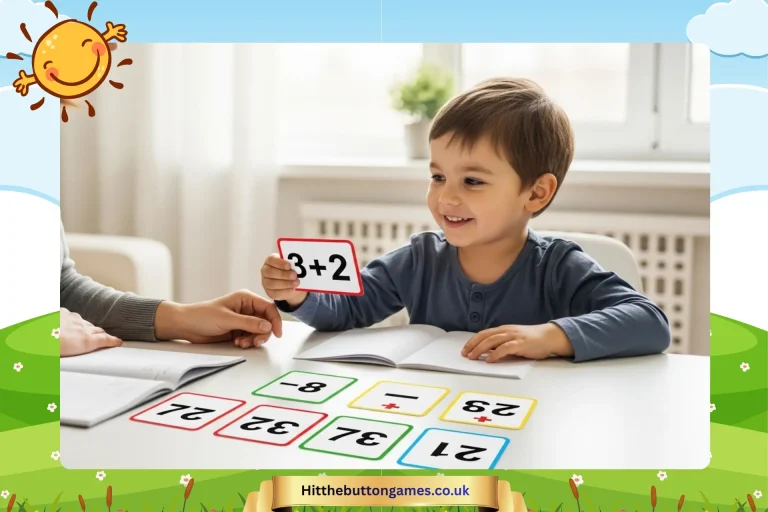
Card Flip Addition
Use a deck of cards. Remove face cards. Each player flips two cards and adds them. The highest correct answer wins that round. This builds speed and number confidence.
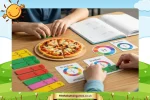
When to Use Worksheets
After games, reinforce learning with teach basic operations worksheets. Worksheets help check understanding. Games build fluency. Both work best together.
Subtraction feels harder for many children because it involves taking away.
Build and Remove Game
Give a child 12 blocks.
Say, “Take away 5.”
Let them physically remove blocks and count what remains.
This shows subtraction clearly instead of memorizing rules.
Board Game Backward Move
Use any board game.
If a child lands on certain squares, they must subtract and move backward. This makes subtraction part of the fun.
Multiplication is repeated addition. Many kids do not see that connection.
Start with grouping objects.
Example: 3 groups of 4 equals 12. Show three groups with four items in each group.
Multiplication Bingo
Create bingo cards with answers. Call out multiplication questions like 6 times 3.
Children mark 18 if they are it. This improves recall of times tables without pressure.
Timed Challenge Rounds
Short, one-minute challenges work well. Do not focus on speed alone. Focus on correct answers first. Speed comes later.
Division often scares students. They see it as complex. But division is simply sharing equally.
Snack Sharing Game
Place 16 small snacks on a plate. Ask, “If 4 children share this equally, how many does each get?” Let them divide physically. This connects division to real life.
Reverse Multiplication Game
If 5 times 4 equals 20, ask:
20 divided by 5 equals what?
This shows the link between multiplication and division.

Children need to check their thinking.
Here are simple to teach basic operations examples with answers you can use during games:
- 7 + 8 = 15
- 14 − 6 = 8
- 6 × 3 = 18
- 24 ÷ 4 = 6
Always ask them to explain how they got the answer. This builds understanding, not just guessing.
Many parents search for a basic mathematical operations PDF to download and print.
PDFs are useful for:
- Extra practice
- Homework
- Revision before tests
But remember this. A PDF should support learning, not replace interactive practice. Children learn best when they talk, move, and think actively.
At Home
Short sessions work better than long ones. Ten minutes of a math game daily is more powerful than one long session each week.
Use real-life moments:
- Add grocery prices
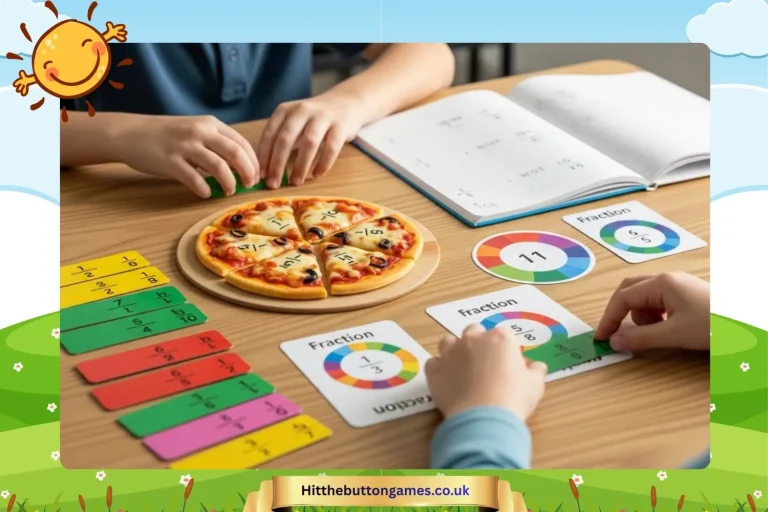
- Divide slices of pizza
- Multiply during cooking
In the Classroom
Rotate between:
- Group games
- Pair work
- Individual worksheets
This keeps energy balanced and supports different learning styles.
Many adults rush through explanations. Here are common problems:
Too much memorizing, not enough understanding
Children need to see why answers work.
Moving to multiplication too soon
Make sure addition and subtraction are strong first.
Using only worksheets
A four basic operations in math worksheet is helpful but not enough alone.
Ignoring mistakes
Mistakes show where thinking breaks down. Talk through them calmly.
Every child learns differently. Visual learners need pictures and objects. Active learners need movement and hands-on tasks.
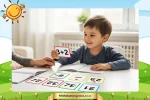
Quiet learners may prefer written practice first. Mix games, discussion, and worksheets to reach all learners.
When you teach basic operations using games, children:
- Gain confidence
- Improve speed naturally
- Reduce math anxiety
- Develop problem-solving skills
- Enjoy learning
The goal is not just correct answers. The goal is comfort with numbers.
Yes. Games can become distracting if rules are unclear. Too much competition may discourage some children.
Without follow-up practice, skills may not stick. Balance fun with structure.
Here is a simple mixed set:
- 9 + 7 = 16
- 15 − 9 = 6
- 4 × 8 = 32
- 36 ÷ 6 = 6
Encourage children to explain each step.
Learning the basic operations in mathematics does not have to feel stressful. When you turn numbers into games, children relax and start thinking more clearly.
Use real objects. Keep sessions short. Mix games with practice sheets. Focus on understanding before speed.
Strong skills in the 4 fundamental operations in mathematics build math fluency and lasting confidence. When numbers feel manageable, children begin to enjoy learning math instead of fearing it.